
The liver is one of our biggest and most important organs and needs to be kept functioning properly. Indications that the liver is not in peak condition include bad skin, a metallic taste in the mouth, bad periods, unexpected weight gain especially around the abdomen and lethargy.
A diet of natural foods contributes to maintaining a healthy liver.
Many people know it is a good thing to detoxify the liver but many are unsure what to use, or have heard horror stories about the impact of a radical detox.
However there is a herb which can help at any time of the year – Milk Thistle. It is commonly used to help build a strong and healthy liver.

Milk Thistle – Silybum marianum
Scientific studies have shown that not only has Milk Thistle the ability to strengthen the liver, it also supports the detoxification process that is so very necessary in keeping healthy in our polluted world.
Vogel’s Milk Thistle Complex contains three herbs traditionally used for their action on the liver. The major additional herbs are Artichoke and Dandelion. Practitioners use these herbs to enhance liver and gall bladder function and improve digestion.
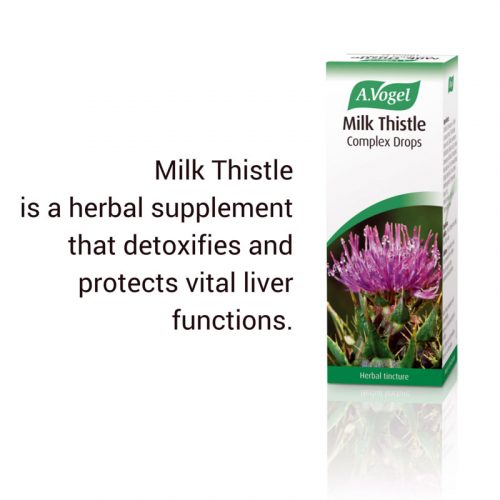
Milk Thistle Complex is an ideal tonic to help restore the liver to its optimum function. The liver is the detoxification centre of the body and performs many vital functions. It stores vitamins and minerals, produces bile which is required for the breakdown of fat and is the main organ involved in the metabolism of food, drugs and hormones.
It converts food into useable energy units for the whole body. An under-performing liver can result in a wide range of health problems such as headaches, weight gain, chronic fatigue, allergies, skin complaints, constipation and nausea.
Living in tension and fear can also upset the liver. So it is of benefit to stop every once in a while and take stock of ourselves and contemplate the best avenues open to us. Keeping cool emotionally may be the best service we could offer to our liver.
We have to combine a sensible diet with emotional control, a philosophy that governs sound health principles, if we want to keep our bodies and minds at their peak.