Shilajit – Conqueror of Mountains

Shilajit (pronounced shee-lah-jeet) is a Sanskrit word meaning roughly “conqueror of mountains” — from shila (rock/mountain) and jit (conquer/win). Shilajit is a thick, sticky, tar like substance that is found in high mountain ranges.

In its natural state it is found as an exudate from rocks high in the mountains. Because it appears to flow from the rocks the ancients often referred to it as the “sweat of the mountains” or “the tears of the rocks”. The Ayurvedic physicians of India prizing it highly as medicine.

How shilajit forms is unknown, but it is thought to be the product of the centuries long decay and amalgamation of plants, herbs and minerals found at high altitude in the mountains. Analysis shows that Shilajit is full of primarily humic and fulvic acids that are themselves made up of a rich blend of organic molecules.

shilajit jar

Jar of Shilajit resin by GoodGuru

Shilajit has over ~ 80 minerals, including iron, zinc, copper, silver, chromium, selenium, gold and magnesium. There are amino acids such as glycine, lysine, tyrosine and glutamic acid, fatty acids such as oleic acid and linoleic acid, triterpenes, sterols and polyphenols, to name a few …et cetera.

Shilajit is classified in Ayurveda as a “Rasayana” substance. A rejuvenator, renewing the body, preventing ailments and enhancing the quality of life. Restoring strength, energy and endurance.

Looking at research on Shilajit and what ailments it could be used for, we find interesting applications:-

  • heart disease
  • mental and neurological disorders
  • high cholesterol and raised blood lipids
  • chronic pain
  • high blood sugar, diabetes
  • inflammation, pain
  • allergies, autoimmune
  • hormonal imbalance

These problems affecting mainly run down, older or chronically ill people. Shilajit may indeed be an Ayurvedic secret to maintaining a healthy body and fighting age related physical and mental decline.

#shilajit #tearsofrocks #sweatofmountains #conquererofmountains #destroyerofweakness #sinemetu

Month of the Cuckoo – Scairbhin

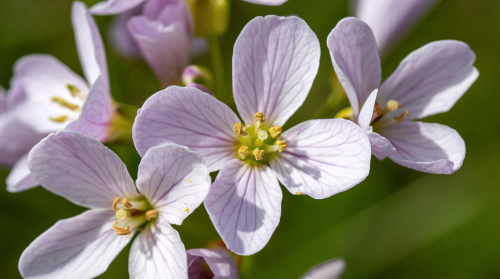
Cardamine pratensis – Cuckoo flower

The Scairbhín na gCuach (skara-veen) translates as ‘the rough month of the cuckoo’ and refers to the period comprising the last two weeks of April and the first two weeks of May a few weeks often marked with changeable extremes of weather patterns.

People working the land and in tune with the seasons know this as ‘the hunger time’ of the year because they were busy planting and tending their crops.

They believed that the Scarbhin was nature’s way of ensuring the crop’s success by the initial unseasonal warm weather allowing seeds to germinate, a sudden cold snap would then harden off the young seedlings and the following wind and gales would distribute the pollen – and this all coincided with the return of the cuckoo.

Cuckoo

Cuckoos overwinter in Africa

Passiflora – Anxiety and stress

Stress is an increasingly common factor in modern day lives and impacts both physically and mentally causing sleeping and nerve problems, anxiety and irritability.

The need in these situations is for a mild but effective sedative that will not cause drowsiness or addiction even if taken long term. A number of herbs work effectively on the central nervous system but some like opium are not suitable for long-term use.

Passiflora has traditionally been used as sedative and to help with mild depression. Beauty is, it has no side effects or contra-indications and can safely be taken long-term alongside medication.

passiflora incarnata

Passiflora Incarnata – Passion Flower

History

The passion flower is well known to the natives of South American as a herbal remedy. The plant was also often used in Brazilian medicinal folklore. The passion flower was mentioned by a Spanish doctor, Monardes in Peru in 1569.

The passion flower began to be used as a herbal remedy in the second half of the last century. It is well known as a sedative.

The remedy’s cardio-tonic properties were recognised in France and in Switzerland. During the First World War passiflora was used as a nerve sedative to treat shell-shock.

Forty years later it was introduced to Europe as an ornamental plant, long before the passion flower was included in Europe’s treasury of medicinal plants. Botanists were fascinated by this climber’s inflorescence.

In his book De florum cultura, published in 1633 the Jesuit Ferrari saw in the various parts of the flower all of the instruments of the Passion of Christ:-

The three-lobed leaves represent the spear, the tendrils the scourge, the three styles the nails of the cross, the stigma represent the sponge steeped in vinegar, the corona at the centre of the blossoms resemble the Crown of Thorns, the ovaries on a stalk represent the chalice, the five stamens the five wounds and the stemmed androgynophore is the cup or according to other interpretations the post to which Christ was bound during the flagellation.

The Jesuits also gave the passion flower its Latin name passiflora incarnata, which is made up of the words passio or ‘suffering’ + flos + the ‘flower’ + incarnata which means ‘to make flesh’ re-incarnation respectively.

Habitat and Cultivation 

Over 400 species of the Passiflora family are to be found in primarily tropical habitat. The plant can sometimes be found growing wild. The main areas of cultivation are in India, Florida, Italy and Spain.

Botanists and plant lovers were responsible for the worldwide dissemination of the plant, so today species of the plant can be found in all tropical and subtropical parts of the world. Some species are less sensitive to cold weather and can survive European winters provided it is growing in a frost-free area.


Organic Passiflora incarnata is available in different forms, as tincture drops, tablets, and homeopathic pillules.

Top