Black Cohosh

Many reports of possible liver toxicity (hepatoxicity) associated with Black Cohosh have appeared over the last few years.

In an analysis of all the 69 reported cases, researchers from the Teaching Hospital of the Johann Wolfgang Goethe University of Frankfurt/Main, Hanau, Germany found that with the hepatotoxicity specific causality assessment methods, there was an excluded, unlikely, unrelated or unassessable causality for Black Cohosh (BC) in 68 of the 69 cases. One patient had a possible causality for Black Cohosh.

In general, the cases of the 69 patients were poorly documented and the confounding variables were wide ranging. The authors concluded that the analysis of the 69 cases showed little, if any, supportive evidence for a significant hepatotoxic risk of Black Cohosh.

Reference: Teschke R et al. Phytomed 2009; 16: 72-84
Iron Tonic

run

Tired of being tired?

The American Journal of Clinical Nutrition has published research carried out on 219 female soldiers taking part in 8 weeks of basic combat training. Half the group were given an iron supplement and half were given a placebo. Those volunteers reporting to the basic combat training with iron deficiency anaemia had improved vigour scores on the Profile of Mood States and faster running time at the end of the training.

The authors conclude that iron supplementation may prove beneficial for mood and physical performance for female soldiers during the training period, and that future efforts should identify and treat female soldiers or athletes who begin training regimens with iron deficiency or iron deficiency anaemia (1).

Five to twelve per cent of otherwise healthy pre-menopausal women suffer from iron deficiency anaemia (2), therefore it makes sense to look at identifying and treating this condition in the wider public.

No better iron tonic than > FLORADIX to maintain your feel-good factor. Keep on running, soldier!

(1) McClung JP et al. Randomized, double-blind, placebo-controlled trial of iron supplementation in female soldiers during military training: effects on iron status, physical performance, and mood. The American Journal of Clinical Nutrition 2009; 90: 1-8.

(2) World Health Organisation. The prevention of anaemia in women: a tabulation of available information, 2nd Ed. Geneva: WHO 1992. Looker AC et al. JAMA 1997; 277: 973-6.

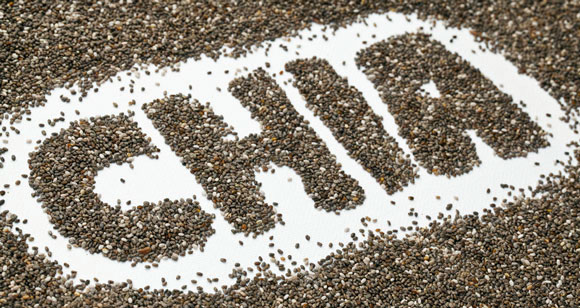
Chia seeds

chia

Chia, a member of the sage family, is an ancient food of the Mayan, Aztec and Southwest Native American people and was a staple in their diet along with corn, beans and amaranth. Chia was so valued that it was offered to their gods in ceremonies and was also used as currency.

Known as the ‘Running Food’, its use as a high-energy endurance food has been recorded as far back as the ancient Aztecs.

  • Chia is one of the highest plant source of Omega-3 known to man.
  • Chia is a very powerful anti-inflammatory.
  • Chia is rich in antioxidants which protect its delicate essential fatty acids from oxidation. Unlike other sources of omega-3 oils (e.g., flax, hemp, or fish)
  • Chia doesn’t require the artificial or added antioxidants in order to remain fresh.
  • Chia has five times more calcium than milk and the calcium is more readily absorbed thanks to the traces of boron which is vital for bone health.
  • Chia seeds are highly hydrophilic with the ability to hold about nine to twelve times their weight in water. This ability can prolong hydration and retain electrolytes in body fluids, especially during exertion or exercise. These hydrating properties also prevent muscle fatigue during exercise and aids muscle recover after exercise.

For further details call into our store.

Top