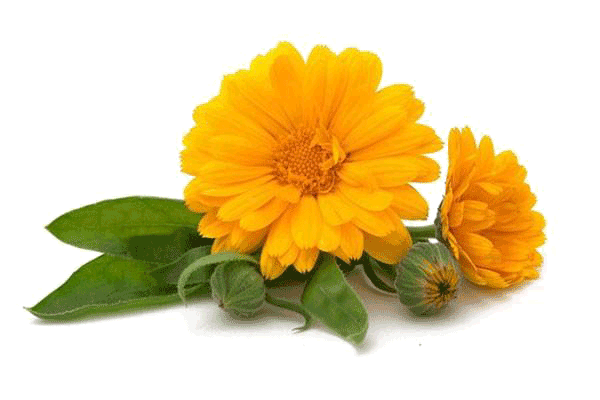
Calendula – Skin Conditions

Calendula

Calendula officinalis – Pot Marigold

Marigold is a common garden plant with a long tradition in herbalism as a treatment for a variety of skin conditions. Calendula has been nicknamed ‘Russian penicillin’ because vast quantities are grown in Russia.

USES Acne, psoriasis, eczema, dermatitis, tonsilitis, wound healing, detoxification.

HOW IT WORKS The active constituents in Calendula officinalis have still to be identified, although studies have reported flavonoids, volatile oil, cartenoids and triterpenes. The triterpenes appear to be the main active group.

The flavonoids may contribute to the anti-inflammatory and lymphatic (cleansing) effect of the herb.

Calendula comes in creams and ointments or in tincture form for internal application.

Herbal throat spray

A randomised double-blind placebo-controlled study* carried out to compare the results of using an Echinacea based throat spray with a pharmaceutical throat spray in patients with acute sore throats has been published in Herbalgram, the journal of the American Botanical Council.

A most encouraging study showed that the herbal throat spray a mixture of echinacea and sage extracts performed as well as its drugs-based counterpart.

Throat Spray Trial

Sore throats are among the most common complaints encountered in general medical practice and generally occur in conjunction with upper respiratory tract infections. Viral infections account for at least 65% of all sore throats, so the use of antibiotics only plays a minor part in the treatment of sore throats.

Each patient was given a patient diary. He or she had to rate their sore throat symptoms (difficulty swallowing, salivation, redness and fever) every morning before administering the first dose of treatment, at midday and in the evening.

The combined response rates showed that the echinacea and sage based throat spray was as good as the pharmaceutical spray for the resolution of symptoms of sore throat. There were no serious or otherwise significant adverse events in either group, and 94% of the Echinacea group said they’d use the product again.

Very gratifying to have clinical research such as this to confirm the benefits of a proven herbal product.

*Reference: Schapowal A, Berger D, Klein P, Suter A. Echinacea/sage or chlorhexidine/lidocaine for treating acute sore throats: a randomized double-blind trial. Europ J Med Res.2009;14(9):406-412.

Thyme – Cough Buster

Are you suffering from a persistent cough? One that’s hard to shift?

Nature’s answer is Thyme, which is well known for its culinary use. The common thyme originates from the Mediterranean and is the most commonly used medicinal variety. Thymes are relatives of the oregano genus origanum.

thyme

Thyme – Thymus vulgaris

USES Chest conditions, coughs, and bronchitis.

HOW IT WORKS The primary active components of thyme are the volatile oils, especially thymol. These act locally on the lungs as they are eliminated from the body through the respiratory tract, disinfecting the airways, relaxing bronchial spasm and reducing the viscosity of mucus.

These actions help the lungs expel mucus, benefiting bronchitis and chesty catarrhal conditions.

Thyme is most effectively taken as a fresh herbal tincture, but it also can give relief as a herbal tea or infusion.

Or take a spoonful of raw thyme honey … to sooth that irritating sensation.

Top